Plan
Define settings, quantities, user needs and performance criteria.
Workplace Settings
Furniture strategy and selection that support different activities, bodies, budgets and the life of the workplace.
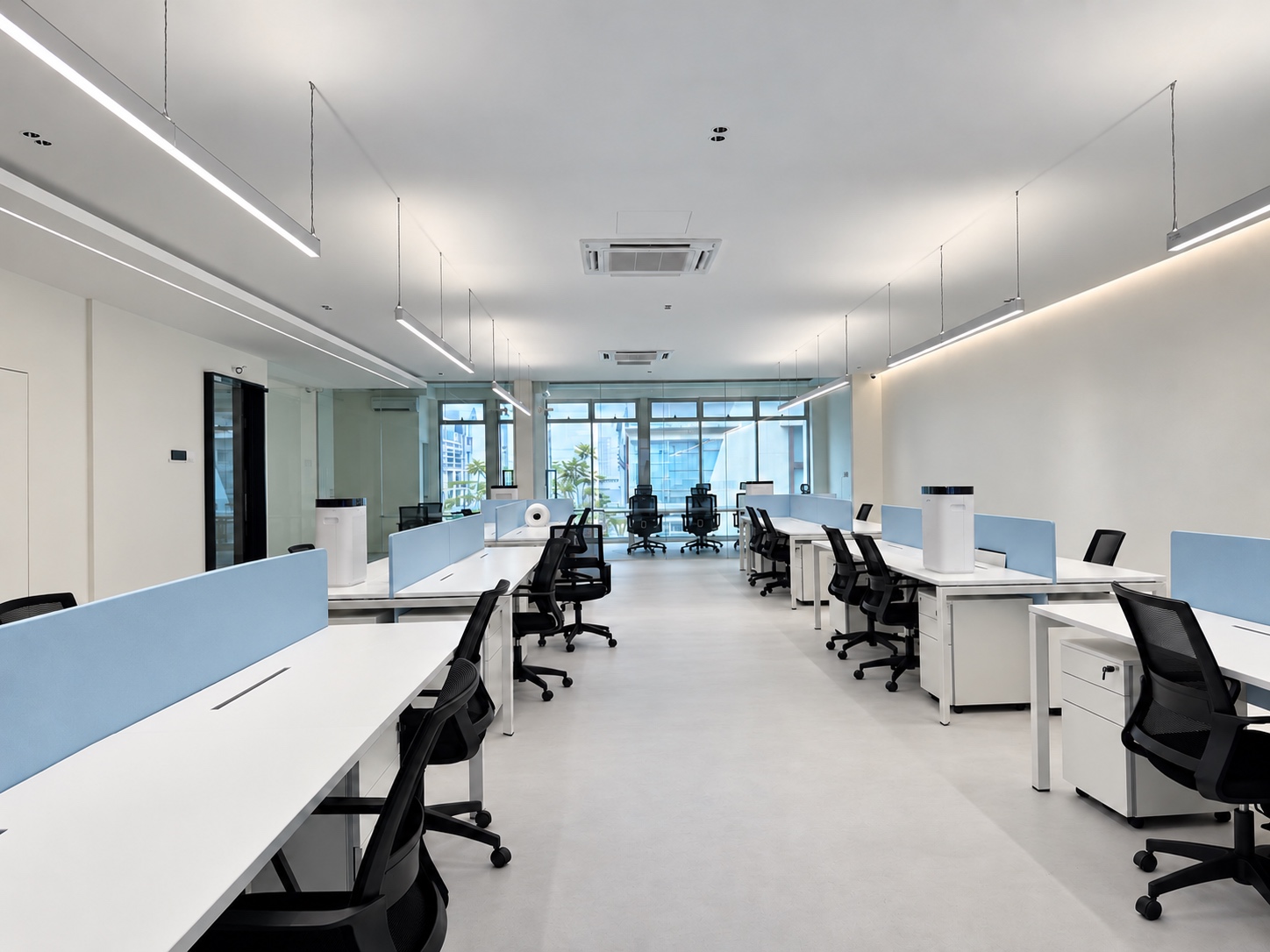
We consider furniture alongside space planning, technology, storage, power and the rhythm of the day. That creates work settings that are comfortable, coherent and genuinely useful.
Selections are evaluated for ergonomics, durability, lead time, maintenance, warranty, budget and visual fit. When furniture is part of a wider project, it stays coordinated with the office design and fit-out programme.
What this includes
Define work settings, quantities, user needs and performance criteria.
Compare products, finishes, ergonomics, lead times and value.
Test critical settings before committing to final quantities.
Manage schedules, power interfaces, delivery, placement and close-out.
Connected decisions
Early planning protects circulation, power coordination, accessibility and budget. It also helps teams choose the right mix of focus, meeting, collaborative and social settings.
See furniture in our workplace projects ↗A clear process
Define settings, quantities, user needs and performance criteria.
Review products against design, operational and commercial needs.
Coordinate delivery, placement, snagging and close-out.
Common questions
During space planning. Desk footprints, meeting tables, storage and soft seating affect capacity, circulation, power and the fit-out design.
Often, yes. Condition, dimensions, ergonomics, compatibility and the cost of moving or adapting it should be assessed before the new plan is fixed.
Mock-ups let users and decision-makers test comfort, scale and functionality before a large order is placed.